
Introduction
Natural stones like granite, marble and quartzite are extracted from quarries. Then cut and processed to form smooth, even slabs. Such countertops are called natural stone countertops. In comparison, quartz countertops are man-made by mixing resins with quartz crystals in factories.
Unlike man-made stone, natural stone needs maintenance. When properly maintained, it lasts for years. There are several reasons to maintain natural stone.
Value: When the stone is well-maintained, it makes your house look young, increasing your real estate’s value.
Durability: Stones last longer when chips and cracks are prevented.
Hygiene: The Maintenance schedule prevents bacteria and mould growth.
Appearance: The stone retains its aesthetic value.
Types of Natural Stone
There are many types of natural stone countertops. Here we are discussing the most popular ones.
- Marble: Soft, elegant, requires gentle care. Marble is formed from metamorphic rock. When rocks, like limestone or dolomite, go through intense temperature and pressure, they transform into marble. Carbonate minerals, sand and other impurities give marble its unique veins.
- Granite: Durable, resistant to heat and scratches. Granite’s hardness and strength make it the most popular choice for kitchen countertops. Granite stone develops when molten magma cools down under the Earth’s surface. Granite is an igneous granular rock. It’s super hard and heat-resistant.
- Quartzite: This natural stone is very hard, dense, and resistant to wear, making it ideal for high-use surfaces. Quartz-rich sand slowly compacts into sandstone. After sandstone undergoes extreme pressure and heat, it metamorphoses into quartzite.
Daily Care Tips
In order to take better care of your countertops, you must understand the stone sealant and the chemicals that harm it. Most natural stone sealants chemically react to acids like vinegar, lemon juice, orange juice, tomato & citrus-flavoured soft drinks. These Acids etch the stone and harm it.
- Avoid using stone cleaners with acidic pH.
- Use stone cleaners with neutral pH.
- Blot the spills instead of wiping them. Wiping spreads the stains.
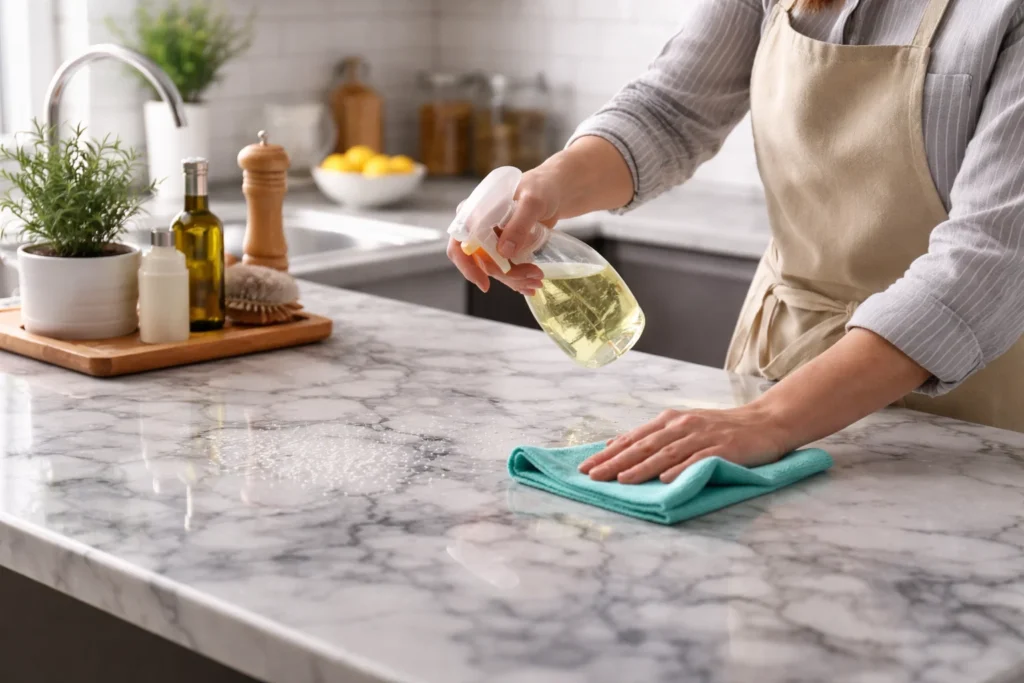
- Use a soft cloth or sponge with mild soap to wash the countertops.
- Clean spills immediately to prevent stains.
Weekly & Monthly Maintenance
Weekly:
- Once a week, check the stone for any chips. Inspection prevents them from turning into bigger cracks.
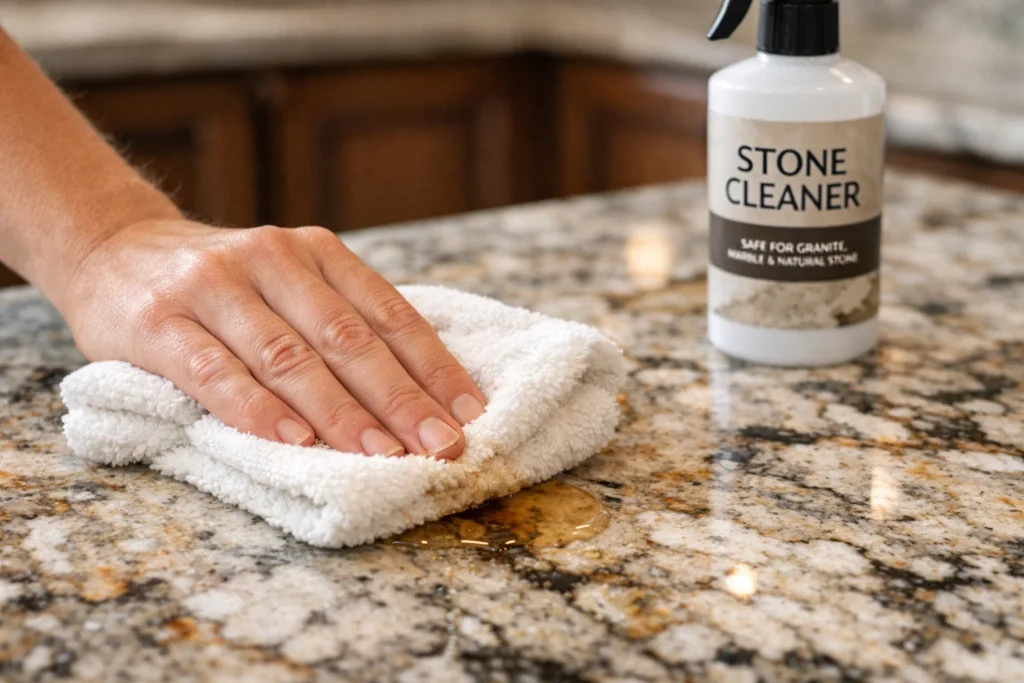
- At the end of every week, wipe the dust with a soft cloth and clean the countertops with water and natural stone countertop cleaners.
- Inspect the stone sealing biweekly.
Monthly:
- Inspect stones in daylight and check for stains, cracks or chips. Inspect the corners of the surfaces; these places mostly get overlooked.
- Clean the surface with water and stone-safe cleaner. Avoid using harsh chemicals and cleaners with acidic pH.
- Use stone-specific polish and apply it gently to restore the surface’s natural shine.
- Inspect the seams and joints. Look for places through which water could get in.
- Finally, inspect the stone sealant.
Sealing Natural Stone
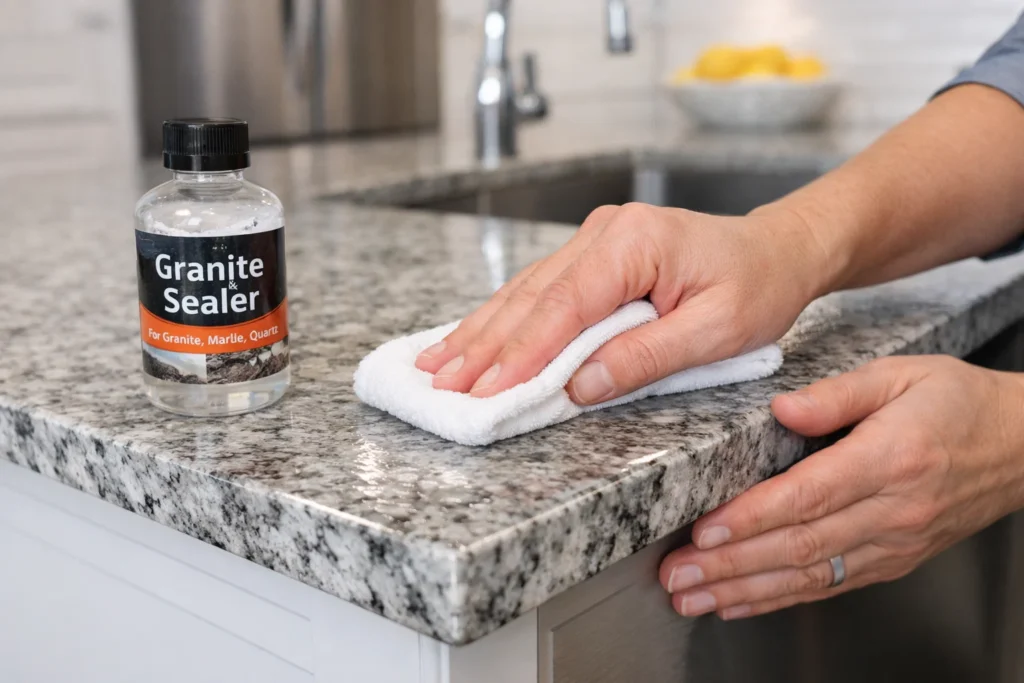
Sealing shields stone from spills and stains. Liquids like coffee, soda, and oil can stain stone because natural stone has pores. Sealing stops stains at the surface, preventing them from penetrating the stone.
- Sealer minimises discolouration and etching.
- Properly sealed stone is less vulnerable to moisture. Preventing the growth of Mildew and mould.
- Sealant preserves the stone’s original finish, luster and colour.
Granite Sealing:
Seal your granite countertops at least once each year. If you cook frequently, reseal the granite more frequently.
Marble Sealing:
Marble is softer and more porous than other natural stones. It is recommended to seal marble every six months. However, depending on the countertop usage, you can seal it monthly as well.
Quartzite Sealing:
Quartzite should be sealed yearly. However, the sealing schedule should depend on your kitchen usage.
Stain & Scratch Prevention
Preventing stains and scratches is easier than fixing them later.
- Wipe spills as soon as they happen. Use a soft cloth and plain water or a mild stone-safe cleaner.
- Use coasters under glasses and mugs, especially on marble and limestone.
- Place mats or trays under oil bottles, soaps, and toiletries.
- Use cutting boards instead of cutting directly on the stone. This protects the surface from scratches and also keeps your knives sharp.
- Don’t drag pots and appliances across the surface. Lift them instead.
- Don’t use rough scrubbers and strong chemicals; they damage the stone finish
Common Mistakes to Avoid
- Avoid using acidic or harsh cleaners.
- Don’t ignore spills or stains for lengthy periods. Clean them immediately.
- Don’t skip or delay sealing schedules or over-seal.
- Avoid using rough pads or brushes that scratch the stone.
Conclusion
Long-term maintenance of natural stone depends on consistent care routines. Daily cleaning prevents stains. Weekly inspections catch minor damage. Monthly maintenance preserves the stone’s natural shine. Sealing at the right time adds an extra layer of protection against moisture & spills.
Properly maintained, natural stone lasts longer & keeps its beauty and hygiene intact. By following simple steps, homeowners can enjoy clean & durable stone surfaces for years to come.